Lifestep
Mobile app · Case study
Lifestep is a step-counting app in Azerbaijani that turns walking into something with a reward attached. Steps count toward sponsored challenges with prizes, a monthly leaderboard and charity campaigns. I designed the app's main screens, from the daily dashboard to the challenge detail.
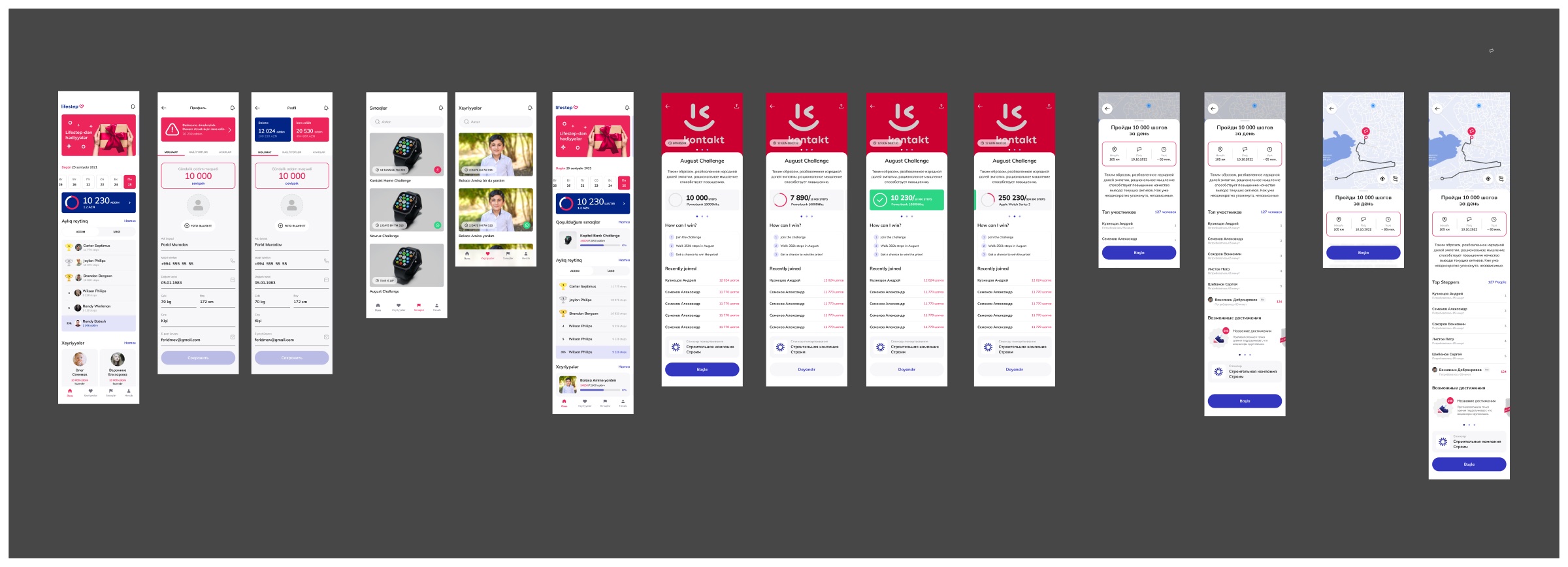
01Overview
Steps as a currency
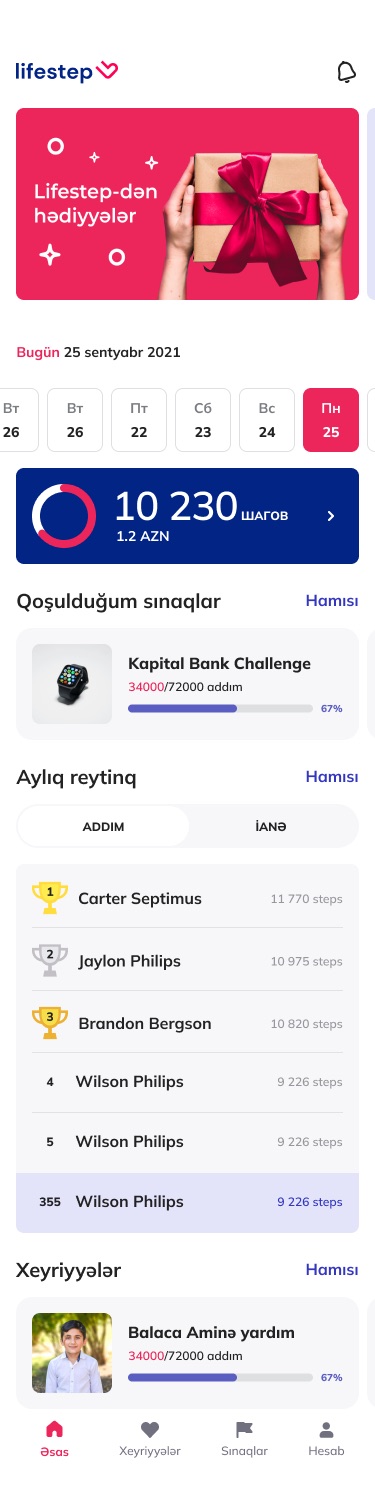
The home screen puts today's step count next to an amount in AZN, so every walk has a visible value. From there the app branches into two things to spend it on: challenges, where brands set a step goal and offer prizes, and charity campaigns that collect steps for a cause.
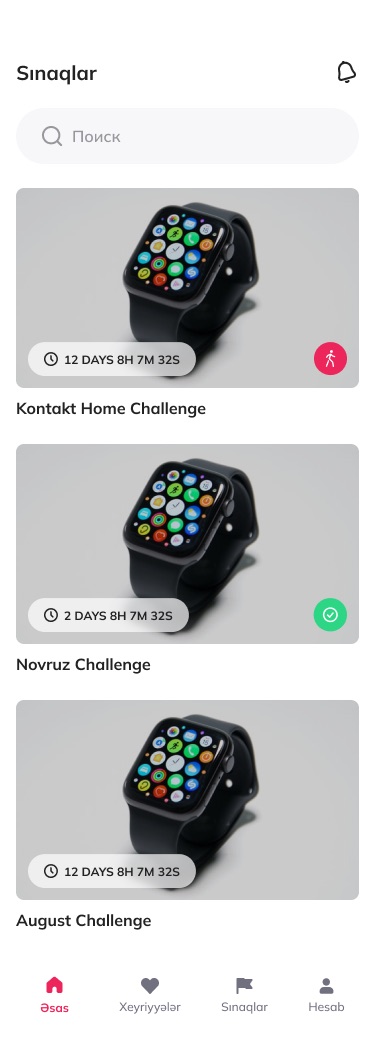
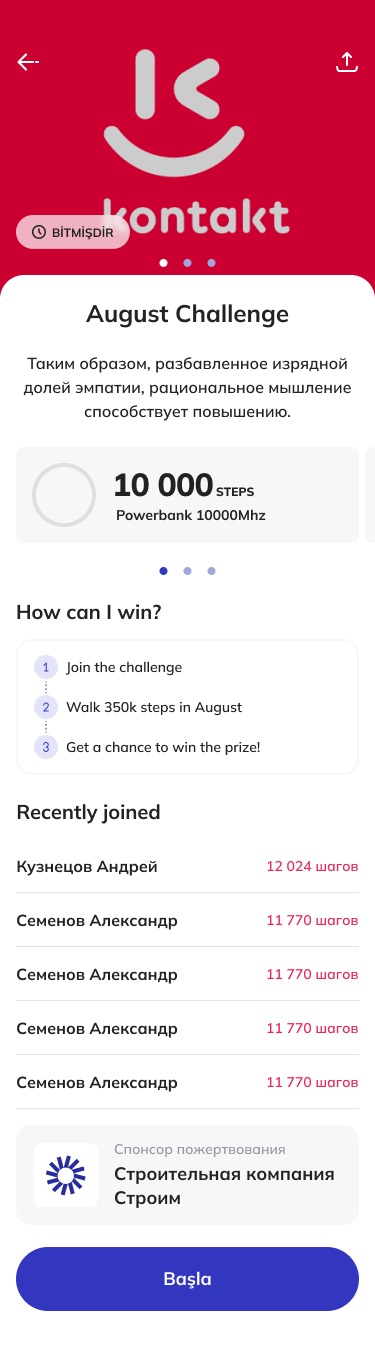
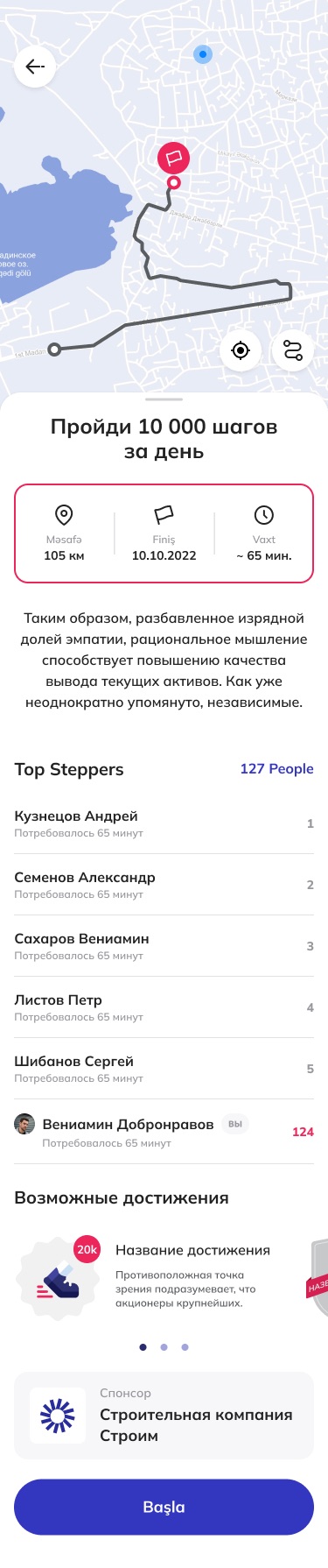
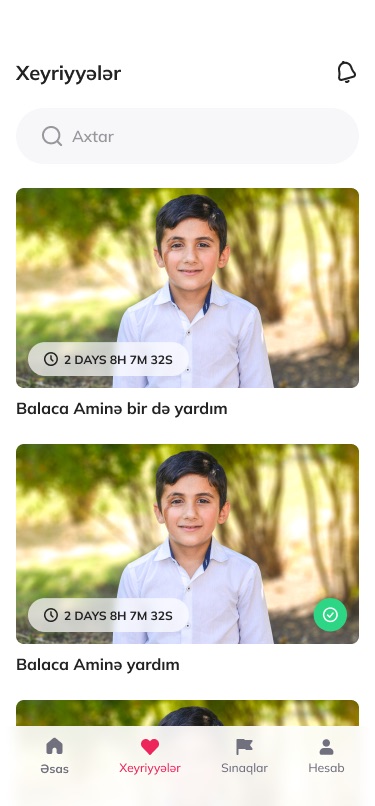
The app has four tabs: Home, Charities, Challenges and Account. Challenges come in two shapes: a sponsored goal with tiered prizes, and a route on a map with a distance, finish date and estimated time.
02What I designed
A dashboard and two ways to use your steps
- HomeToday's steps, joined challenges, the leaderboard
A week strip to switch days, a progress ring with steps and AZN, then joined challenges, the monthly ranking and charity campaigns.
- LeaderboardMonthly ranking by steps or donations
A toggle switches between the two; the top three get trophies and your own row stays highlighted at the bottom with your position.
- ChallengesSponsored goals with prize tiers
A swipeable card per prize shows the step target and your progress, followed by "How can I win?", recent participants and the sponsor.
- RoutesMap-based walking challenges
A route drawn on a map, with distance, finish date and estimated time, a top-steppers list and possible achievements.
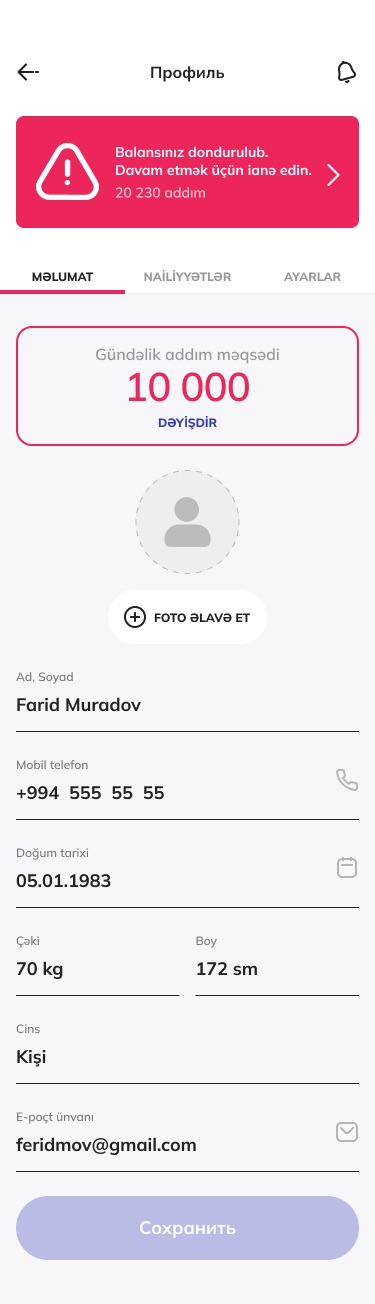
- ProfileDaily goal and personal details
An editable daily step goal above the form, and a warning banner when the balance is frozen until the user donates.
03Screens
From the dashboard to a challenge
- Add client and year to the header line (currently "Mobile app · Case study"). The design shows Kontakt Home and Kapital Bank as challenge sponsors; confirm whether to mention them.
- Several descriptions are Russian placeholder text, and the UI mixes Azerbaijani, Russian and English; the case study does not describe copy.
- The rule behind the "balance frozen" state (why it freezes, how donating unlocks it) is inferred from the banner text only; confirm.
- Confirm your role and whether the app shipped.